
[“The following copyrighted article is shared
with permission, and courtesy of theartpulse.com”]
Source link
An Article by MJ (626 words, 3 min. read)
The passing of Amine El Bacha invites a return to painting as a space of memory and presence.
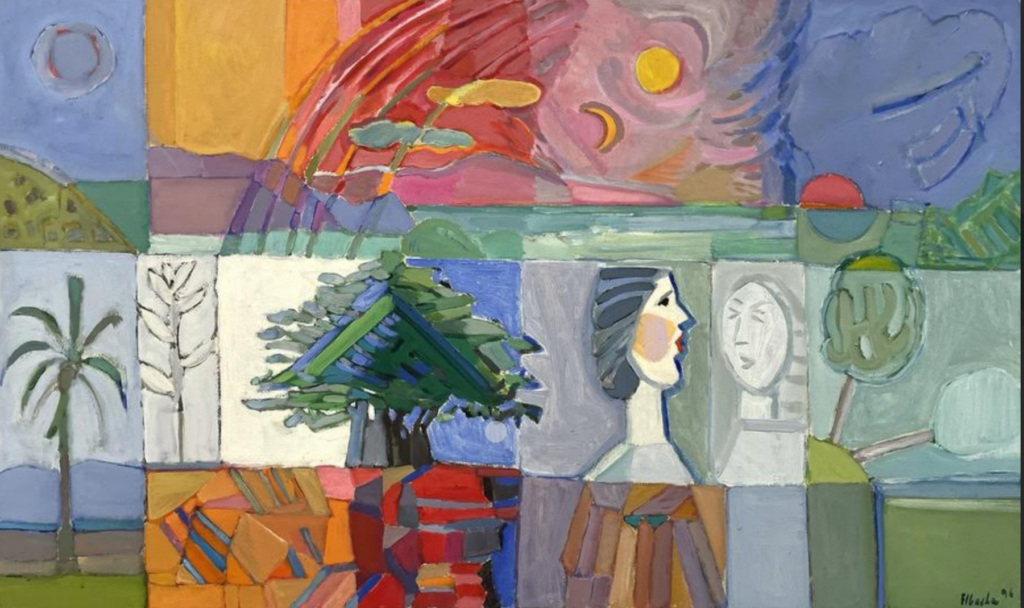
His work remains anchored in the human figure, in the body as a site of emotion, history, and daily life. Each artwork carries a quiet intensity, shaped by observation and internal reflection. His paintings continue to speak through composition, through color, through the weight of lived experience.
To remember him means to stand before these figures and to feel their proximity.
Beirut as Foundation
Born in Beirut, El Bacha developed his artistic language within a city marked by movement, contrast, and layered histories.
Beirut entered his work through its people, its interiors, its rhythms. The city appeared through seated figures, through moments of pause, through the quiet density of everyday life.
His paintings reflect a deep connection to place, shaped by attention to human presence.

Between Beirut and Paris
Like many artists of his generation, El Bacha continued his formation in Paris, where he engaged with European painting traditions while maintaining a strong link to his origins.
This dialogue between Beirut and Paris shaped his visual language. His work brought together structure and spontaneity, composition and gesture. The figure remained central, yet it evolved through painterly exploration.

His paintings carry this movement between places, forming a space where experience and artistic inquiry meet.
The Centrality of the Figure
El Bacha’s work revolves around the human figure.
His characters inhabit interiors, cafés, and quiet settings. They sit, wait, think, or simply exist within the space of the canvas. Their presence shapes the composition, giving weight to the surrounding objects and atmosphere.
The figure becomes a point of attention through which emotion and memory are conveyed. Each posture, each gesture, carries a sense of lived reality.

Color and Gesture
El Bacha approached painting through direct engagement with the surface.
His brushstrokes remain visible, active, and expressive. Color moves across the canvas in layers that suggest both structure and freedom. The composition develops through interaction between figure and space, between tone and line.
This sensitivity fully extends into his watercolors. In these works, the gesture becomes lighter, more immediate, guided by the flow of water and pigment. The figures appear through fluid washes, through transparent layers that allow the paper to breathe within the composition. Each stroke carries a sense of movement and precision, where restraint and spontaneity meet.
This approach gives his work a sense of immediacy, where the act of painting remains present within the finished piece.

A Place in Lebanese Painting
Within Lebanese art, El Bacha occupies a distinct position.
His work contributes to a broader exploration of the figure within modern painting. It reflects a sustained attention to daily life, to human presence, and to the spaces people inhabit.
Alongside other major artists, he helped shape a visual language rooted in observation and personal expression, offering a perspective grounded in both local context and wider artistic dialogue.

Teaching and Transmission
Beyond his work as a painter, El Bacha played an important role as an educator.
Through his teaching, he shared his approach to drawing, composition, and perception. He encouraged a direct relationship with the subject, guided by attention and practice.
This transmission extended his influence beyond his own work, shaping generations of artists who continue to explore painting through similar concerns.
What Remains
What remains of Amine El Bacha lives in the figures he painted.
Through these works, memory takes form. Gesture becomes language. Painting becomes a place where life continues to be observed, felt, and held.
They continue to inhabit their spaces, carrying silence, presence, and emotion. Each painting offers a moment of encounter, where the viewer meets the subject within a shared field of attention.
