17.1K
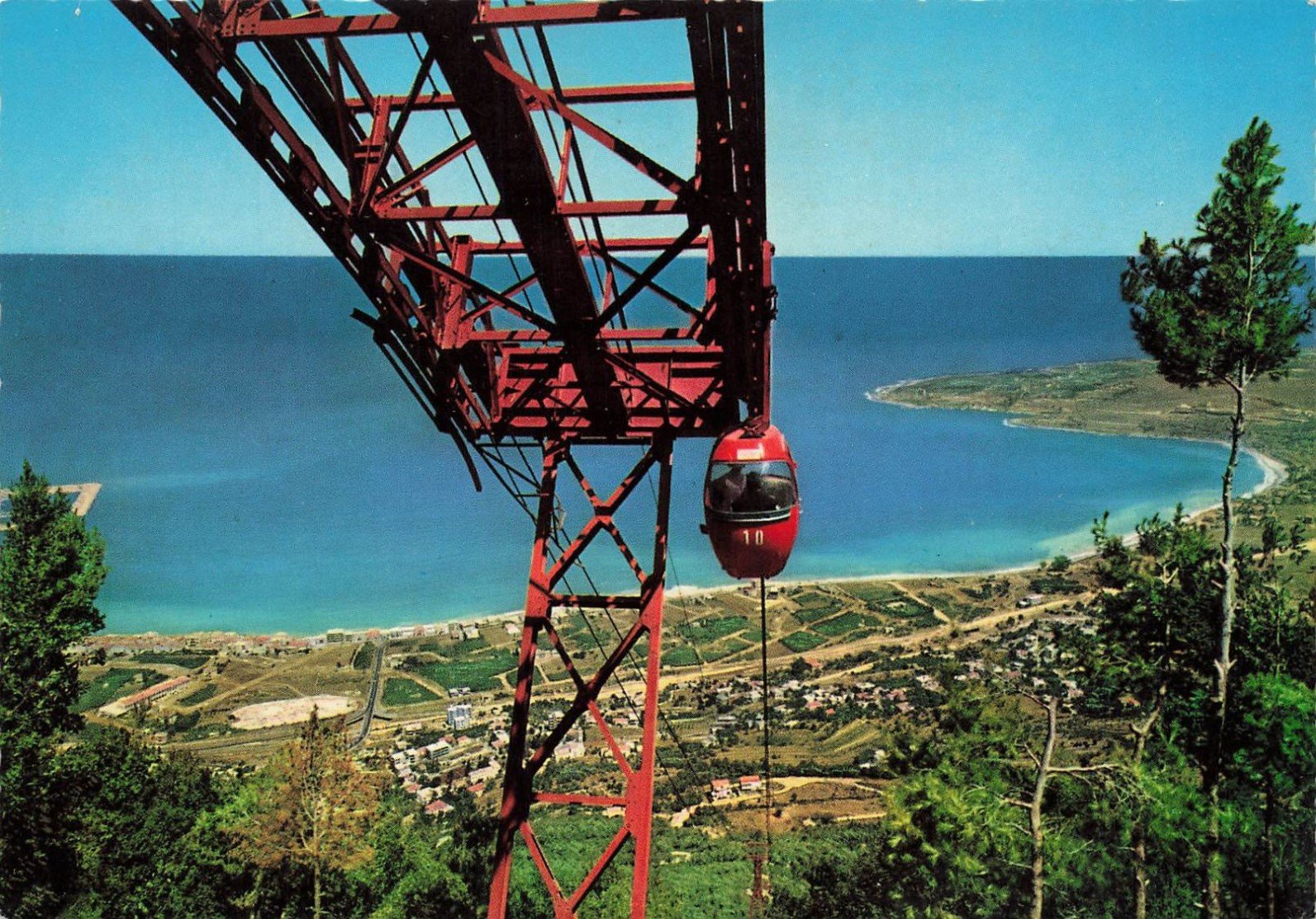
Rising gently above the shimmering bay of Jounieh and climbing toward the sacred heights of Harissa, the Teleferique du Liban is more than a scenic ride. For over half a century, it has been a symbol of Lebanese ambition, ingenuity and quiet resilience, carrying generations of visitors between sea and sky while bearing witness to the country’s ever-evolving story.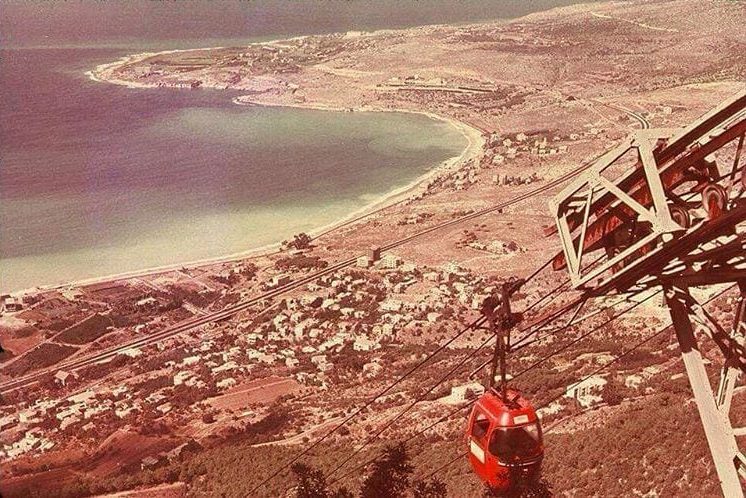
In the early 1960s, the idea of an aerial cable car in Lebanon seemed almost implausible. When entrepreneur Fouad Boulos first proposed the concept to then-president Fouad Chehab, it was met with confusion and disbelief. Nothing like it existed in the region; the closest explanation he could offer was “a train in the air.”
Yet Boulos remained undeeterred. Inspired by images of alpine cable cars in Switzerland, he envisioned a way to connect the coastal city of Jounieh with the hilltop shrine of Our Lady of Lebanon — making the pilgrimage site more accessible while creating a new kind of attraction for the country.
After years of planning and construction, the Teleferique of Jounieh officially opened to the public in 1965, becoming the first cable car of its kind in the Middle East. It did more than introduce a new mode of transport; It symbolized a spirit of innovation and optimism that defined Lebanon’s golden era.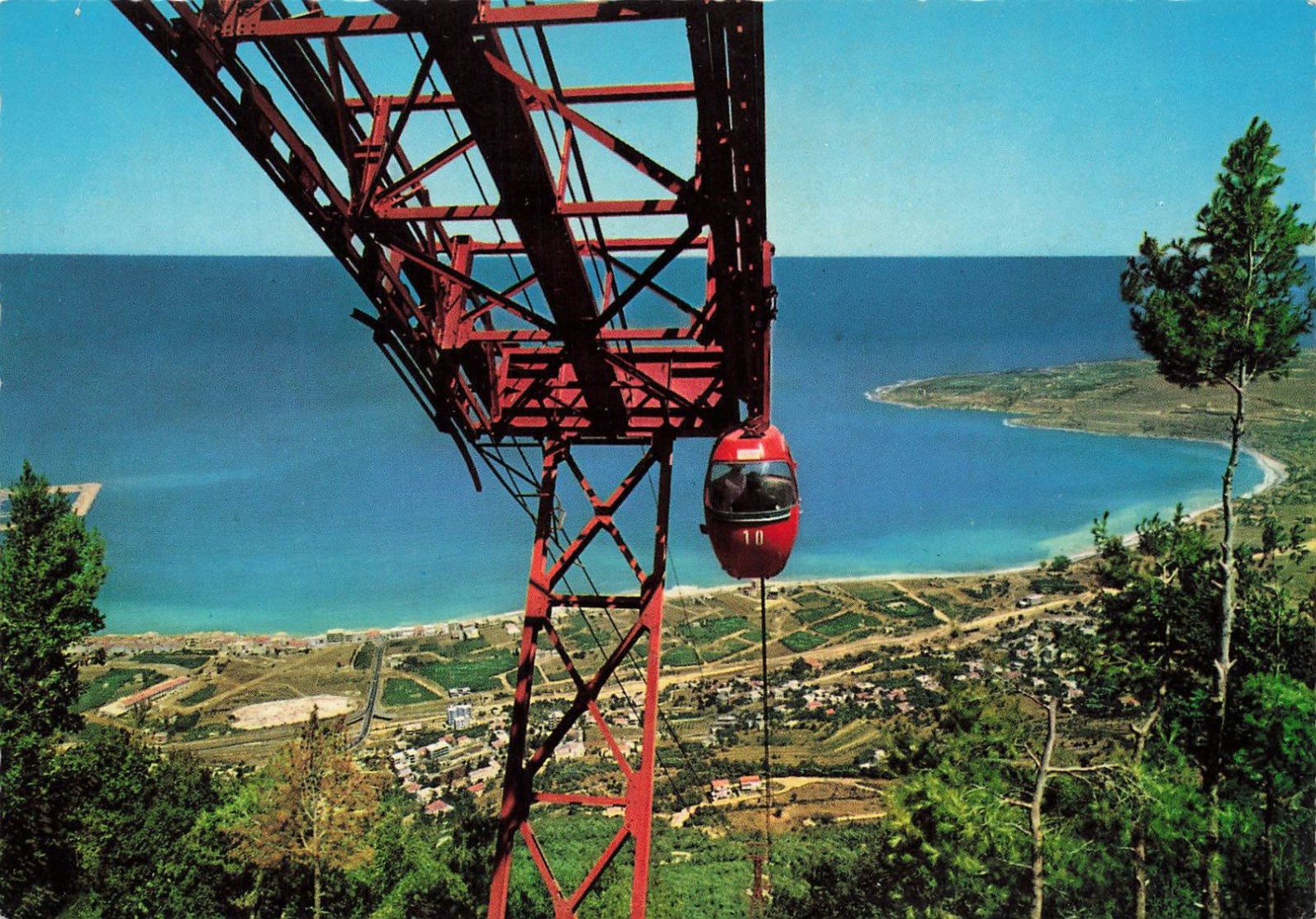
The journey itself quickly became part of the experience. Suspended above pine-covered slopes, passengers are treated to sweeping views of the Mediterranean, the curve of Jounieh Bay and the dense greenery of the surrounding hills. At the summit stands the towering statue of Our Lady of Lebanon, one of the country’s most important pilgrimage sites and a place that continues to welcome visitors of all backgrounds.
Over the decades, the Teleferique has also found its place in popular culture. Its colorful cabins and panoramic vistas make it a natural setting for film and television, particularly during the golden age of Arab cinema. Romantic scenes shot high above the coastline cemented its image as a place tied to memory, nostalgia and storytelling.
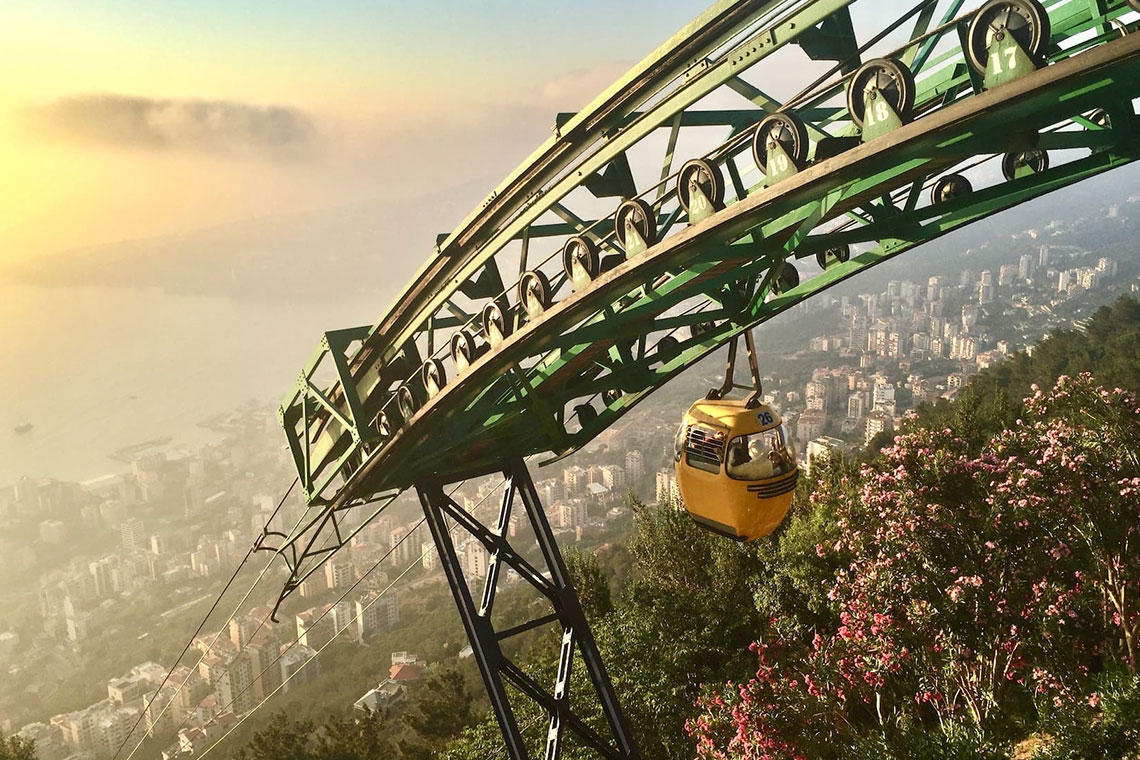
Few landmarks in Lebanon have remained as constant. Throughout the Lebanese civil war, the Teleferique continued to operate whenever possible, pausing only during the most difficult moments. In doing so, it became more than an attraction; it became a quiet symbol of continuity in a country marked by disruption.
It has seen Lebanon at its peak, its darkest chapters and its many recoveries. From the vibrant decades of the 1960s and early 1970s to the years of conflict and the long process of rebuilding, the Teleferique has remained part of the landscape, steady, familiar and enduring.
Today, the Teleferique continues to welcome hundreds of thousands of visitors each year. While Harissa remains a major pilgrimage destination, the experience itself has broadened far beyond religious tourism. Families, travelers and locals alike come for the views, the journey and the sense of connection to a shared national landmark.
In recent years, efforts have been made to enhance the experience around the site. A landscaped promenade now winds through the surrounding greenery, while dining options at the summit offer visitors a chance to linger and take in the panoramic scenery. These additions have helped renew interest in the destination while preserving its original charm.
More than sixty years after its inauguration, Jounieh’s Teleferique remains what it has always been: a meeting point between nature, heritage and human vision. It does not simply transport passengers up a mountain, it carries with it decades of memory, resilience and the enduring spirit of Lebanon itself.
If you enjoyed reading this, check out our mini guide to Jounieh.