[“The following copyrighted article is shared
with permission, and courtesy of theartpulse.com”]
Source link
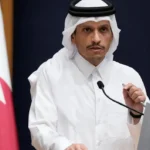
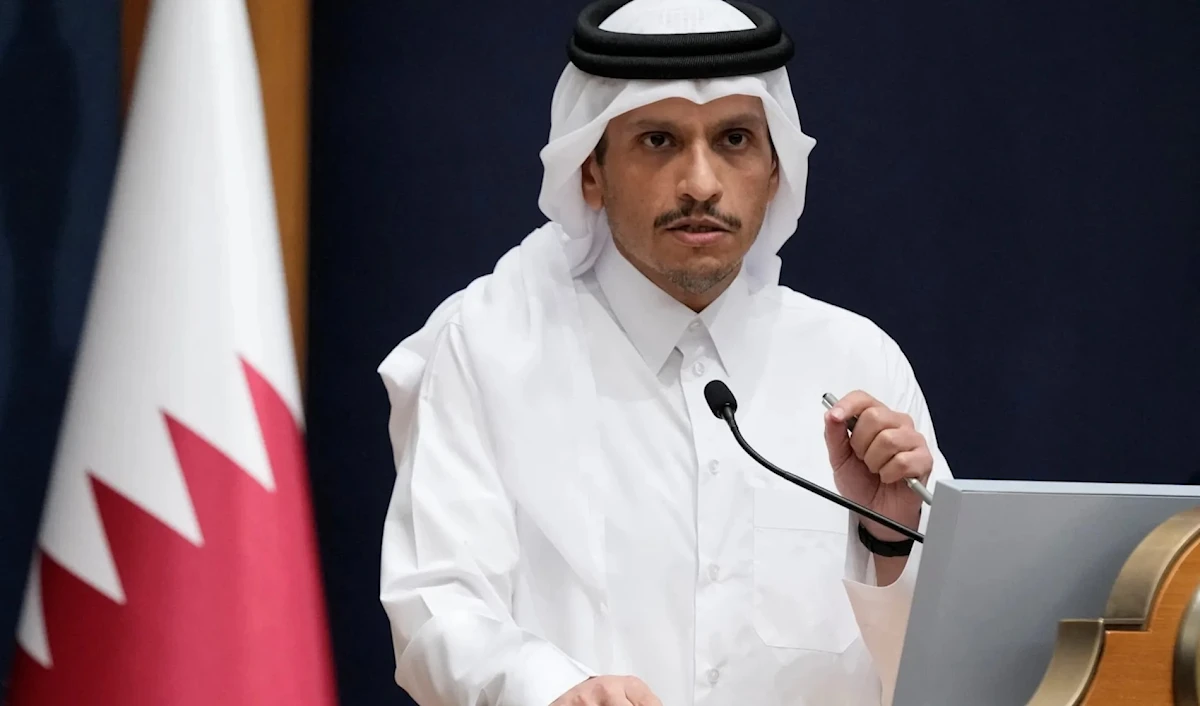
The Qatari Prime Minister, Mohammed bin Abdul Rahman Al Thani, announced that efforts should focus on “protecting the negotiation path” between Tehran and Washington, and “reaching a result that prevents escalation.”
The Qatari official said, in a press statement, that “the goal of the memorandum of understanding between Washington and Tehran is to stop the war and establish negotiations,” noting that the memorandum “establishes an institutional framework for the negotiating process.”
He added: “The institutional framework that was presented yesterday is good, and the technical discussions are continuing,” noting that “there are files being discussed between Washington and Tehran, such as the nuclear file, and others being discussed with the countries of the region, such as security and the Strait of Hormuz.”
He pointed out that “the priority of the State of Qatar is to put out the fires in the region and reach a stage of calm,” considering that “the negotiating process between Washington and Tehran will witness many points of contention.”
Bin Abdul Rahman added, “There are actions that increase the state of escalation in the region, and we are working to put out the fires,” pointing out that “a mechanism has been put in place to avoid any escalation in the region, and to address any event before it occurs.”
The Qatari Prime Minister stressed that “there are parties seeking to sabotage the negotiations, but we sensed an insistence on a solution from both parties.”
He considered that “what Iran did towards us and our brothers during the war is unacceptable,” adding: “There is a Gulf consensus to achieve a common vision for dialogue with Iran in order to solve problems.” We want to see Tehran cooperating with the Gulf states according to a high level of trust.”
In addition, the Qatari official announced that “the United States is playing the correct role regarding Israeli actions in Lebanon,” considering that “it is unacceptable for Israel to kill about 100 Lebanese within a few days in light of the ceasefire.”
He said: “The continued occupation of Lebanese lands must end, and Lebanon’s sovereignty must be respected,” noting that “escalation anywhere in the region, whether in Lebanon or elsewhere, will affect the negotiations.”
He added: “Unfortunately, this is not the first time that Israeli Prime Minister Benjamin Netanyahu has caused a state of escalation in the region.”
Vance: We have put in place a mechanism to avoid escalation and shooting
On the other hand, US Vice President J.D. Vance announced during a press conference in Switzerland that “the Iranians have agreed to invite international inspectors to their country,” considering that “this is a very important step.”
He explained that “talks with International Atomic Energy Agency inspectors will begin today in Bürgenstock.”
Vance pointed out that “a mechanism has been put in place to keep the Strait of Hormuz open,” in addition to another mechanism “to avoid escalation and exchange of fire,” and a third mechanism “to remove mines from the Strait of Hormuz.”
He said: “We have made progress in the nuclear talks, and the technical talks will continue throughout the week,” noting that “great progress has been achieved, but we still have a lot to accomplish.”
He added: “We hope to reach a final agreement and a permanent settlement, and we focus on celebrating the progress that has been made.”
Vance touched on the situation in Lebanon, saying: “We have put in place a mechanism to prevent clashes in Lebanon with the aim of stopping the escalation,” considering that “Israel has the right to defend itself, but within a mechanism that prevents things from getting out of control,” adding that “Iran must restrain Hezbollah.”
Earlier today, an Iranian source confirmed to Tasnim Agency that “despite the lifting of the naval blockade, Iran does not equate the Strait of Hormuz with the blockade,” noting that “no negotiations were conducted regarding the nuclear file, nor were any discussions held with the Director General of the International Atomic Energy Agency, Rafael Grossi.”