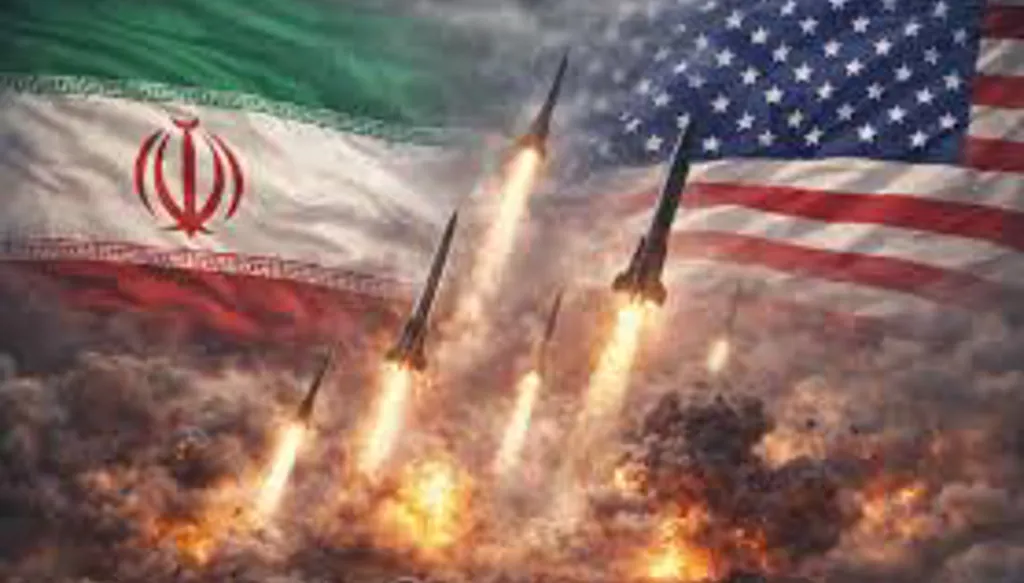
US President Donald Trump decided not to significantly expand military operations against Iran at the present time, after warnings that a broader tour might deplete the US stock of interceptor missiles and air defense systems deployed in the region, and leave US forces and Washington’s allies more vulnerable to attacks.
According to what the New York Times reported, the decision was taken following a meeting held by Trump, on Friday, with his senior advisors and prominent officials in his administration, during which they presented a series of concerns about the repercussions of the escalation, most notably the state of the stock of Patriot missiles and other air defense means at the Pentagon in the region.
The report stated that one of the central considerations in the discussions was the US administration’s fear that expanding operations would lead to a serious depletion of the interceptor missile stock, thus reducing the ability of the US Central Command to protect the bases and forces deployed in the region.
The newspaper quoted two sources familiar with the deliberations that the Chairman of the US Joint Chiefs of Staff, General Dan Keane, warned in closed talks that resuming a broad war against Iran is possible from a military standpoint, but it may seriously consume the interception missiles available to the US Central Command.
The New York Times indicated that this potential shortage was one of the most prominent factors that prompted the administration to consider returning to large-scale operations a step that entails great risks, especially in light of the continued need to protect American forces and the facilities of its allies in the region.
The report added that Trump and his senior advisors also expressed their concern about the possibility of the confrontation expanding into a broader regional war, and the resulting damage to relations with Washington’s allies in the Gulf, who may be exposed to Iranian attacks.
According to the newspaper, the deliberations addressed the possibility that the escalation could lead to a global economic crisis and an additional rise in energy prices, in addition to the worsening refugee crisis, at a time when the unrest related to the war and its repercussions on navigation and oil supplies continues.
The New York Times reported that Trump is still studying how to manage the war that has been ongoing for nearly five months against Iran, especially how to reopen the Strait of Hormuz, in conjunction with the rise in fuel prices again following the resumption of fighting during the past two weeks.
According to the report, diplomatic efforts have reached a dead end, while the latest round of American strikes, according to estimates reported by the newspaper, have not succeeded in deterring Iran militarily.
The two sources who spoke to the newspaper said that few, if any, of those around Trump believe that expanding the war at the current stage is the appropriate option. The report also quoted another senior American official as skeptical that the resumption of widespread fighting would push Iran to return to the negotiating table.
In parallel, a Trump administration official told Reuters that stopping air strikes on Iran aims to encourage a diplomatic solution, while maintaining an actual military threat if Tehran refuses to enter into serious negotiations.