
The Financial Times newspaper indicated in a report that while Iran’s closure of the Strait of Hormuz has sent shock waves through the global economy, and although the Iranian threat to shipping traffic in the Gulf is widely viewed as an asymmetric response to the Israeli-American aggression against Iran, what Tehran is doing is in fact reproducing a weapon that the United States has long used: sanctions, as it has turned a vital choke point in the global economy into a weapon to force its opponent to reduce escalation.
The newspaper pointed out that the rise of sanctions as a tool in modern war, and that this is not the first time that the Donald Trump administration has faced reactions from opponents who use their own economic weapons. Upon his return to power, Trump launched an attack on the global trading system by imposing high tariffs on allies and adversaries alike. Several countries allied with the United States submitted and quickly signed trade agreements to maintain their relations with Washington, but the response to the American threat was not global, as China stood firm and launched a counterattack. When the United States announced new export controls in late 2025, Beijing responded by imposing restrictions on its exports of refined rare earth elements.
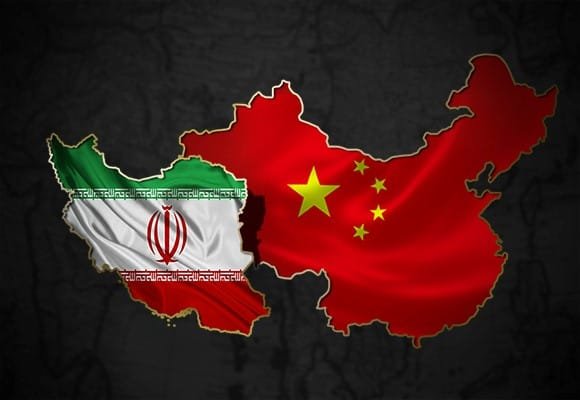
She stated that in the decades following the end of the Cold War, the United States largely monopolized the use of major sanctions. But this situation no longer exists, according to Mulder, as both Iran and China have shown that the era of American dominance in economic warfare has ended.
She added that China’s vital metal weapon has hit American manufacturers in the defense, aviation and automotive sectors, leading to delays and reductions in production in North America and elsewhere. Ultimately, Chinese pressure on US supply chains prompted Trump to back down. The agreement concluded with Xi Jinping in South Korea last October was a Chinese-American truce in the field of economic coercion, and it is holding up so far, according to Mulder.
Now, through his war on Iran, Trump has unleashed a much greater set of risks, as the entire world experiences the damage that a policy of economic coercion could cause if it expands its scope. By moving from a “maximum pressure” policy of sanctions on Iran to open war, the United States pushed the Iranians to use an economic weapon of their own, which is cutting off about 20% of oil and gas flows to the world and a third of the global fertilizer trade that passes through the Strait of Hormuz, while imposing this closure with missiles, drones, and mines.
The British newspaper asked: “What does the end of the unipolar era in economic warfare mean for the global economy? It is clear that the United States and its allies will face difficult confrontations, especially when seeking to use sanctions in the oil market. The Iranian blockade has caused a major shock in energy prices, which prompted the Trump administration to temporarily ease its sanctions on Russian oil.” As for the European Union, which recently celebrated its imminent separation from Russian gas, it may find itself forced to continue purchasing energy from Russia to avoid economic damage. Thus, confronting the consequences of Iran’s activation of its oil-blocking weapon necessitated lowering the level of the economic war on Moscow. However, the fact that other countries are increasingly resorting to economic pressure does not mean that they will achieve better results than the United States, as the failure of sanctions is a historically documented phenomenon.
She pointed out that the economic blockade imposed by Qatar’s neighbors in the Gulf between 2017 and 2021 did not achieve its goals. Sanctions imposed by the Economic Community of West African States have also failed to repair relations with the military regimes in Mali, Burkina Faso and Niger. Likewise, China’s use of rare earth export controls against Japan, and its ban on imports of Australian coal, have made Tokyo and Canberra more hostile to Beijing, not less.
The newspaper does not consider this surprising, as throughout the history of economic coercion, the continued use of sanctions often pushes targeted countries to become more self-reliant and search for new partners. Diversifying trading patterns weakens the pressure effect over time. After 2022, Russia redirected its trade towards Asian economies to avoid sanctions. Chinese companies also responded to US tariffs by moving production abroad, and mitigated the impact of chip export restrictions by accelerating domestic innovation. In a global economy burdened by sanctions as it is today, further pressure may lead to diminishing returns.