67
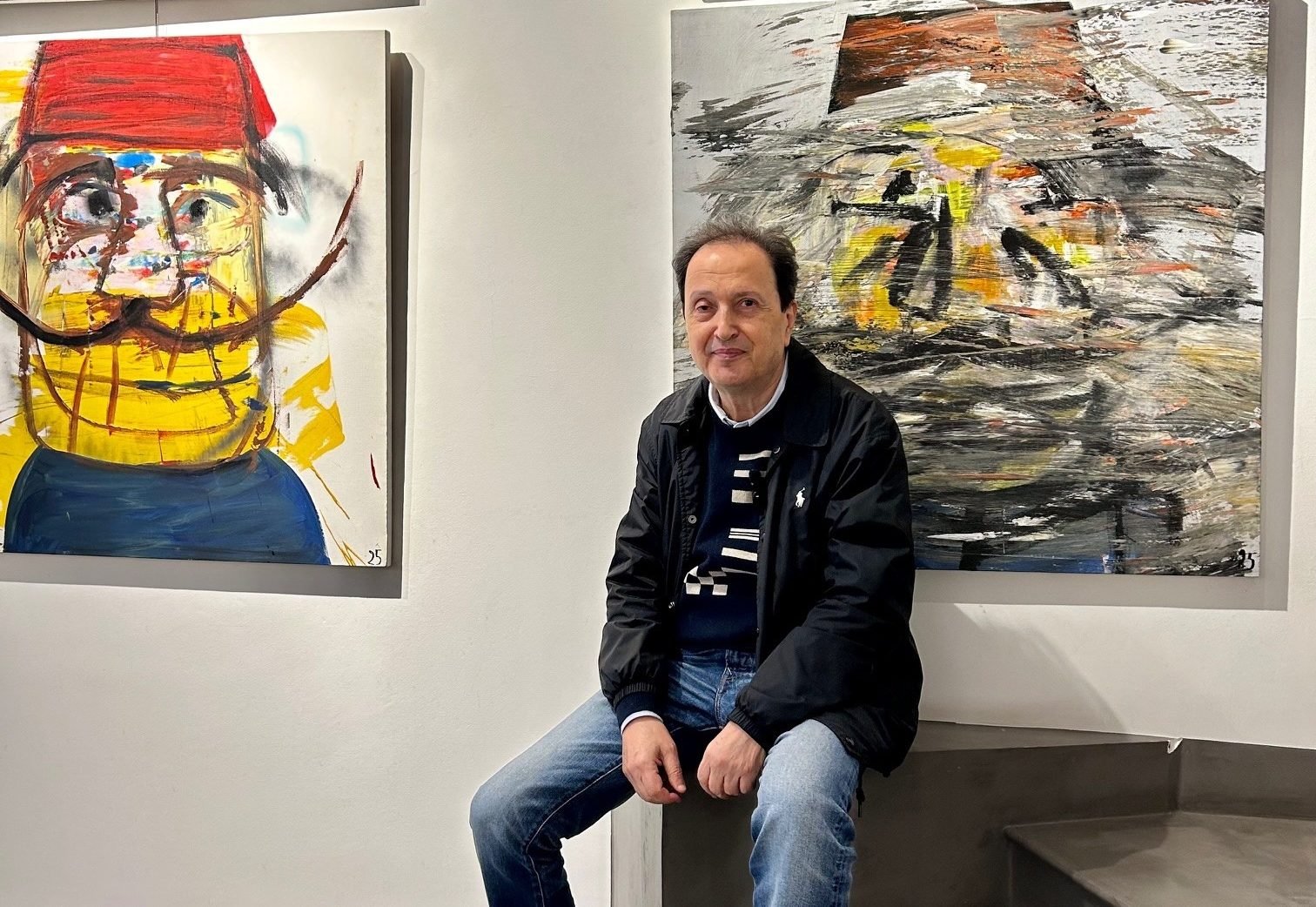
For more than half a century, Lebanese painter Raouf Rifai He has explored the complexities of human identity and psychology. Born in Baalbek and raised in Beirut, Rifai’s life has unfolded alongside Lebanon’s turbulent modern history — an experience that profoundly shaped his artistic vision and the recurring themes in his work.
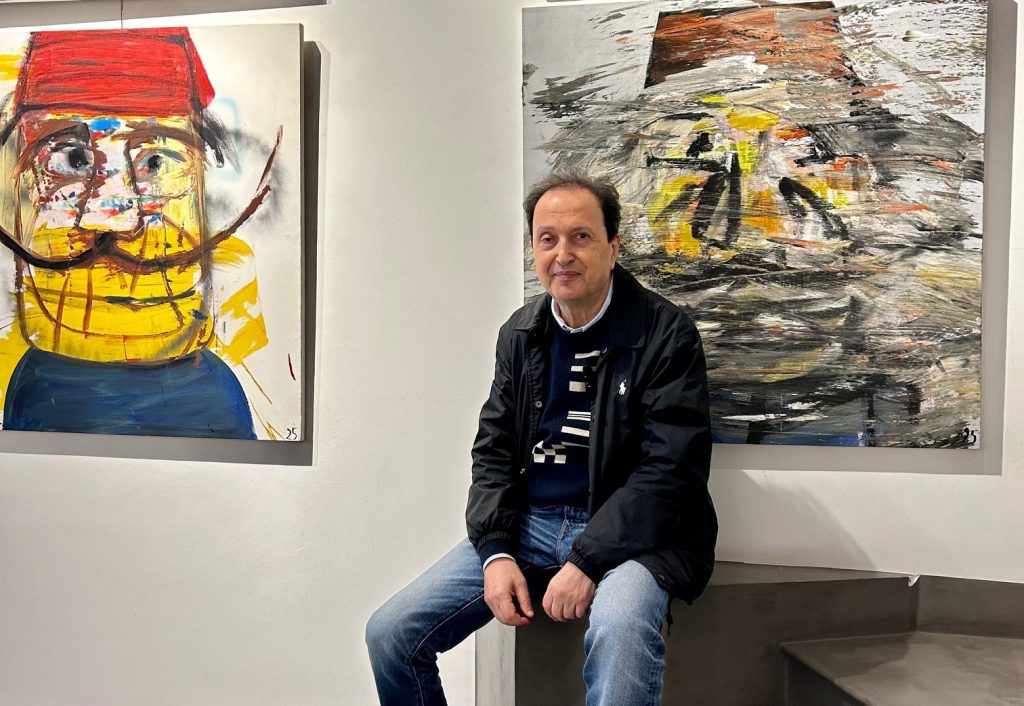
Central to Rifai’s art is the Darwich, a figure that embodies the human psyche, social contradictions and the multifaceted identity of the Middle East. In this conversation at Nadine Fayad Art GalleryRifai reflects on his childhood in the Bekaa, the early influences that shaped his creative output and why he believes that art must always engage with society.
I was born in Baalbeck and lived there until I was seven. The city was like paradise, full of greenery, running water, Roman ruins and an air of history. My father would take me to the top of the hills, and I would sketch everything I saw. But when my father passed away, our family moved to Beirut, and everything changed. The transition was sudden and harsh — from a lush, open space to the crowded, complicated reality of the city. I stopped drawing for years.
It wasn’t until I joined Saint Joseph School in Mtein that I returned to painting. That early contrast between paradise and chaos, memory and reality, deeply influenced my art. It shaped my focus on human psychology, the inner life of individuals and the symbolic language I developed through figures like the Darwich. My work became a way to process the complexities of society, identity and human experience in Lebanon.
Being Lebanese has given me a dual lens: one of love and admiration for the country and one of frustration with its failures. Lebanon is diverse, rich in culture and history, yet burdened by sectarian divisions, bureaucracy and social inequality. My art expresses that tension. I focus on themes of identity, community, resilience and the human condition.
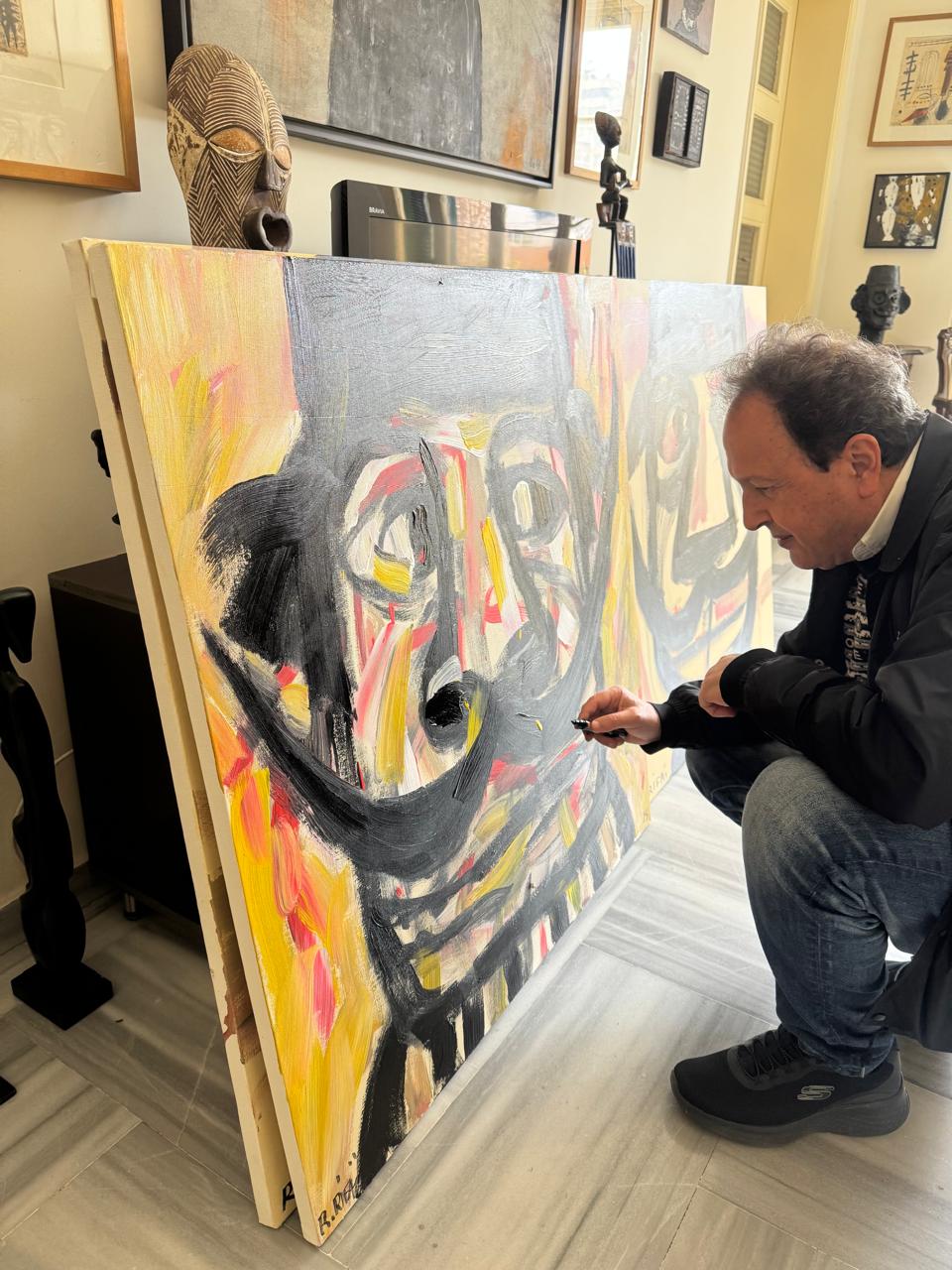
The Darwich is a human symbol, not just a religious or folkloric figure. He is a hero, sometimes a clown, sometimes a thinker, always multilayered. He wears masks to reflect the social performance required in our societies — the fear of authority, the compromises, the humor we use to cope with difficulty.
Through the Darwich, I explore psychological complexity, cultural contradictions and universal human behaviors. He transcends geography while remaining rooted in social observation. Every Darwich is different; Each painting offers a new personality, a new story. Collectors often return to acquire multiple pieces because they see continuity and evolution in his character.
Studying decorative arts in Lebanon grounded me in craftsmanship, technique and a deep appreciation for detail. My PhD in urbanism in Paris exposed me to theory, structure and international perspectives. The combination allowed me to blend technical skill with conceptual thinking.
In Lebanon, I learned the importance of culture, local memory and artistic heritage. In Paris, I saw how art interacts with urban space, society and politics. Both experiences encouraged me to experiment and develop a language that is uniquely my own — rooted in Lebanese reality but engaged with global art discourse.
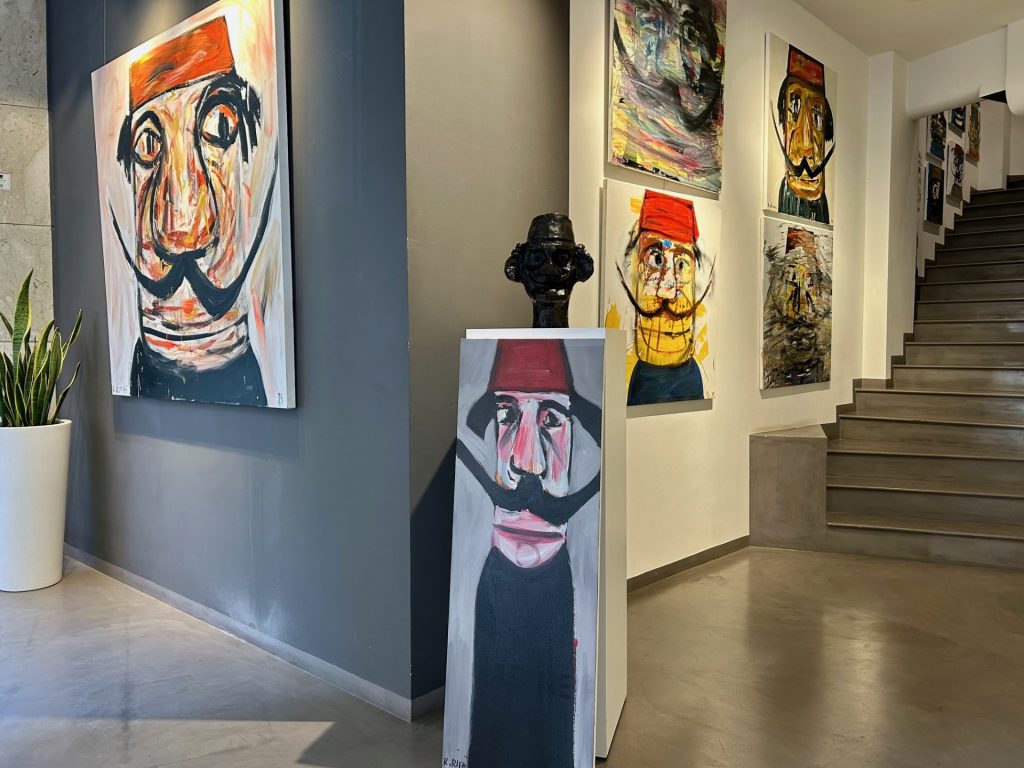
I began with small, detailed drawings and gradually moved to larger canvases to amplify the impact of my ideas. Over the years, I have experimented with many styles, but the core — the exploration of human psychology and social reality — has remained. My early works focused on landscapes, people and primitive forms. The Darwich later emerged as a central motif, allowing me to condense social observation, humor and criticism into a single symbolic figure.
My evolution is continuous. Every painting is an experiment, a way to challenge myself, to innovate while maintaining authenticity. Style and technique are tools, but the subject — humanity, society and identity — is constant.
The recognition validated the direction I had taken with the Darwich series. It showed that my work resonated not only with Lebanese audiences but also internationally. It reinforced my belief that art must communicate social, psychological and cultural truths and not just aesthetic pleasure. The prize encouraged me to continue experimenting and to expand my vision.
I miss the openness, the intimacy, the community. I miss the landscapes, the forests, the mountains, the sea and the sense of belonging. I miss the everyday pleasures: walking through streets alive with people, the markets, the scents of food, the rhythm of life that is unpredictable but vibrant. I miss the cultural mosaic, the mix of religions, histories and stories that make Lebanon extraordinary.
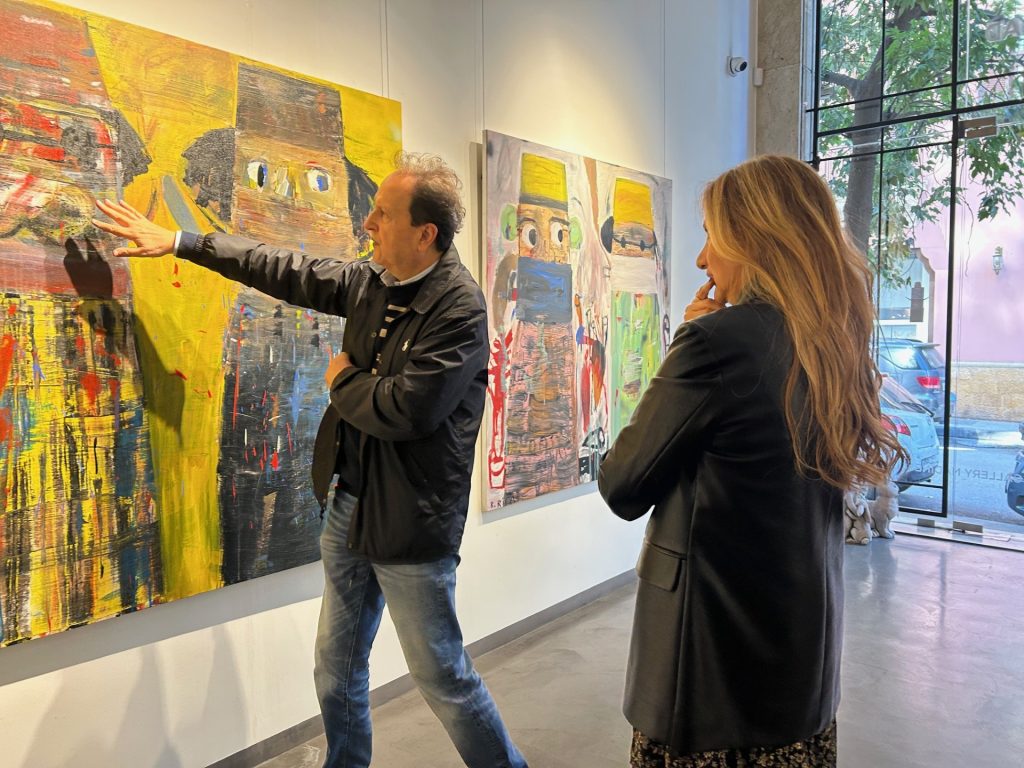
Rifai with gallerist Nadine Fayad
My advice to young artists is to be authentic and experimental, to embrace both technique and concept, and to find a voice that is rooted in personal and social experience. I emphasize the importance of patience and hard work. Art is not just creation; it is reflection, criticism and engagement with the world.
I also encourage them to observe society, history and human behavior. Art should not exist in isolation. It must speak, challenge and provoke thought. And above all, they should stay sincere. Without sincerity, art loses its power.
If you enjoyed reading this, check out our Interview with Lebanese photographer Roger Moukarzel.