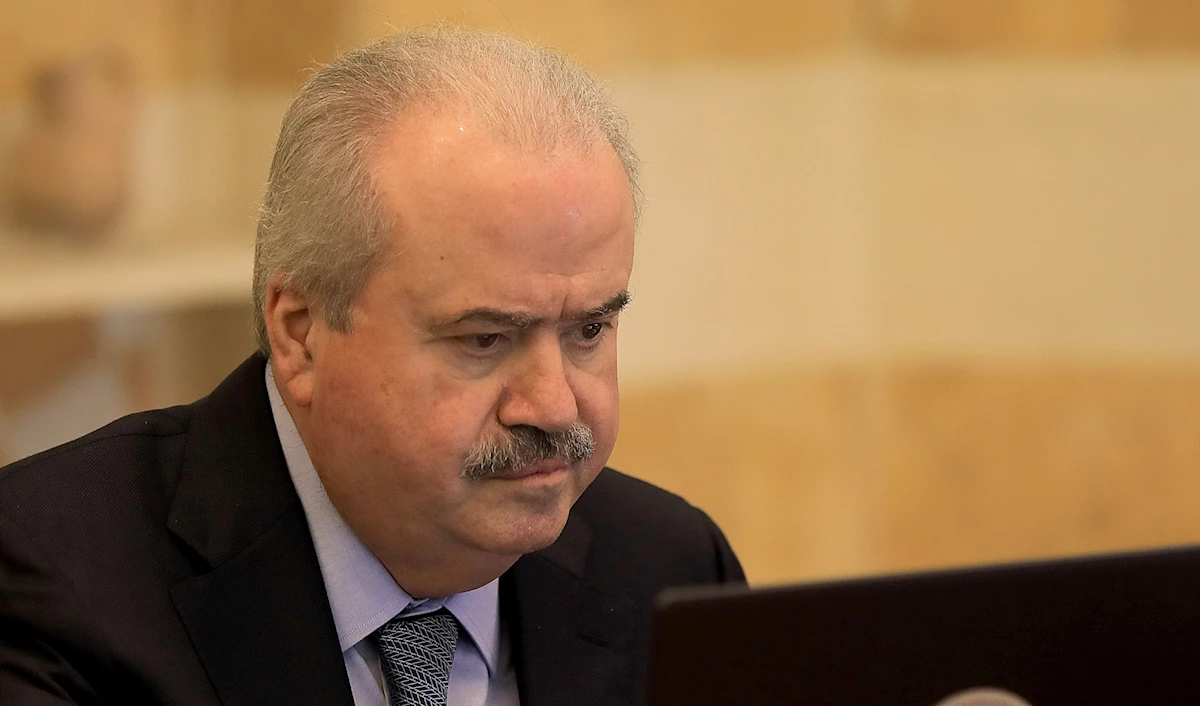
The Minister of Finance, Yassine Jaber, held a coordination meeting today, devoted to following up on the rapid assessment of the damages and needs of the repercussions of the war (RDNA), in the presence of the Director of Public Finance, George Maarawi, and representatives of the Presidency of the Council of Ministers, the National Council for Scientific Research (CNRS), along with Lebanon’s international partners from the European Union, the United Nations Development Program and the World Bank.
During the meeting, Jaber stressed the importance of “effective coordination between national and international bodies to accelerate the pace of damage assessment and precise prioritization, paving the way for the phase of reconstruction and recovery on realistic and sustainable foundations,” and “the necessity of adopting a proactive approach in this sensitive phase, which allows limiting the repercussions of the war on the economy, especially on the balance of payments and public finances, while emphasizing the priority of maintaining stability.”
He pointed out that the crisis management policy in the Ministry of Finance “is based on rearranging spending priorities in light of the decline in revenues as a result of the war and the disruption of economic activity, so that priority is given to paying salaries in order to preserve the continuity of the work of institutions, in addition to securing hospitalization expenses and providing support and relief to the displaced.”
Jaber called for “adopting a greater degree of flexibility in redirecting existing funding from donors in a way that suits the nature of the emerging emergency, while emphasizing the necessity of a more flexible and rapid response by development partners, and working to urgently increase the volume of support to alleviate immediate pressures on the humanitarian levels, the balance of payments and public finances, in a way that contributes to maintaining stability and paving the way for a faster recovery.”
He expressed his appreciation for the speed of the international community’s action and response, calling, at the same time, for adopting a “comprehensive and integrated approach to the response, away from fragmentation, which has proven limited in its effectiveness in previous experiences.”