
[“The following copyrighted article is shared
with permission, and courtesy of theartpulse.com”]
Source link
An Article by MJ (743 words, 4 min. read)
In the village of Zefta, a new space for art opened with the warmth of a deeply personal vision. Zefta Arthouse grew from the dedication of Bahjat Darwiche, whose commitment to culture found form in a place where artists could gather, work, and show their creations. His nearby guest house had already welcomed travelers and friends into the calm of the South. The creation of the arthouse extended that same spirit toward painters, sculptors, and image-makers who carry the region within them.
This project came from a recent attachment to art and to the land. The house for art stands within the village and shares its daily rhythm. Windows open toward hills and olive trees. Light moves slowly across walls where works now hang. The space offers time and attention to artists whose practices remain deeply connected to place and memory.

Zefta and the Endurance of the South
The South of Lebanon holds a long history shaped by hardship and rebuilding. Villages learned how to continue, how to plant again, how to bring life back into streets and homes. Within this landscape, the opening of an arthouse carries profound meaning. A cultural space rises among fields and stone houses and becomes part of the region’s ongoing life.

Zefta carries this strength with quiet clarity. The creation of an arthouse within the village affirms the vitality of its cultural life. Art takes its place among daily routines, conversations, and shared meals. The presence of artists and visitors brings movement and attention. The house for art becomes part of the environment and part of the story of the South.
A Living Exhibition
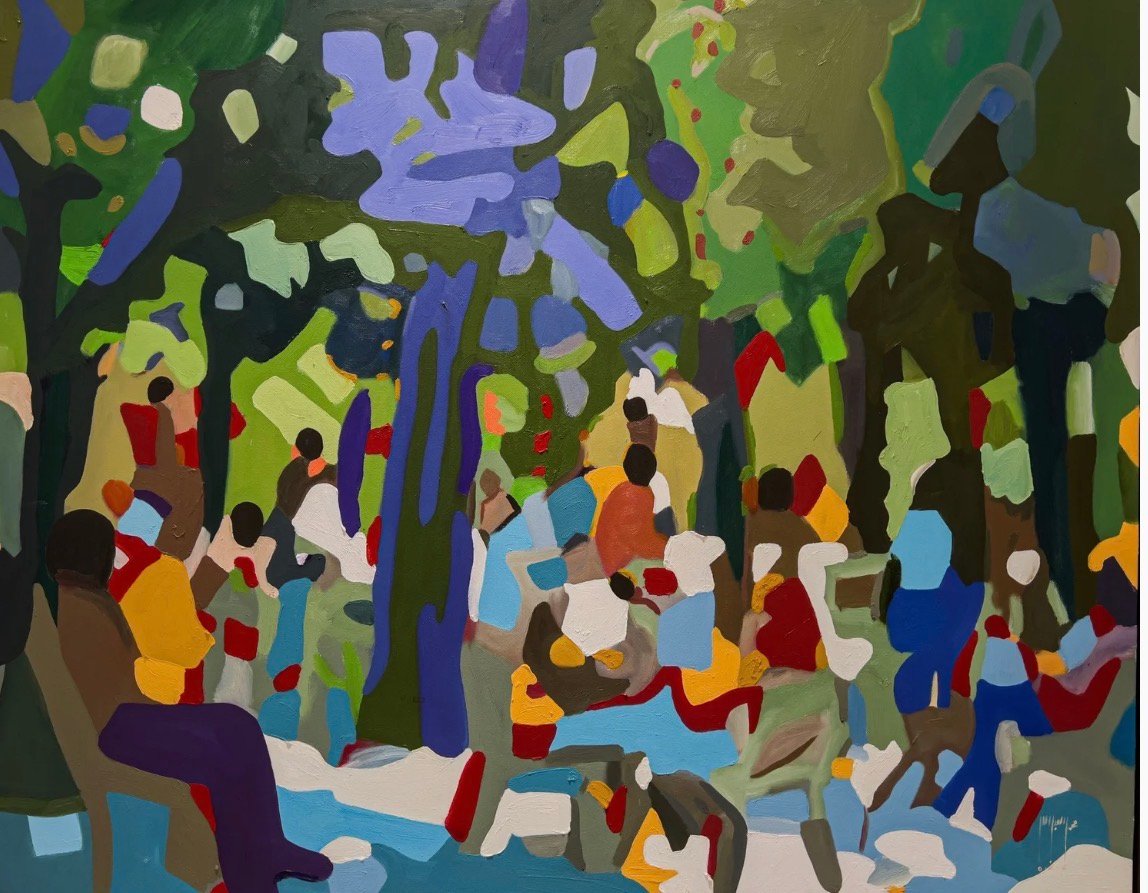
The inaugural exhibition Shared Presence unfolded across the rooms as a living gathering of images. Paintings, sculptures, and mixed-media works formed an atmosphere of reflection and connection. Landscapes appeared through layers of color and textured surfaces. Figures emerged in quiet postures, grounded in the weight of experience and memory.

Many works carried the tones of the South: earth colors, soft horizons, and the light of open fields. Some compositions explored abstraction through layered pigment and movement. Others held the intimacy of daily scenes shaped by observation and feeling. Together they created a space where visitors moved slowly from one work to another, discovering a range of artistic voices tied to the same land.

The exhibition presented a general view of artistic practices rooted in the region. It revealed sensitivity to landscape, attention to human presence, and a deep connection to memory. Each work contributes to an environment of shared awareness and contemplation.

Hospitality and Creation in One Place
The proximity to Dar Zefta, the guest house, creates a natural continuity between hospitality and artistic life. Visitors arrive and remain close to the spaces where artists work and exhibit. Conversations extend across terraces and rooms. The landscape surrounds both places and shapes the experience of those who stay there.

The guest house offers calm and welcome. The arthouse offers space for creation and presentation. Together they form a cultural refuge where artists and visitors share time and attention. The village becomes part of this environment, and the environment becomes part of the artistic process.

Resilience Written in Light
The opening of Zefta Arthouse marks a moment shaped by persistence and faith in culture. The South of Lebanon has endured years of war, tension, and uncertainty. Fields have been damaged and rebuilt. Homes have been restored. Communities have remained rooted in their land through cycles of upheaval. Within this context, the creation of a house for art carries a profound sense of resilience.

Artists continue to paint, sculpt, and imagine within a region that has known conflict and displacement. Their works carry memory and continuity. The presence of an arthouse in Zefta affirms that cultural life continues to grow through dedication and care. It affirms that creativity belongs to the everyday landscape of the South.

Zefta Arthouse now stands as part of this enduring landscape. It welcomes artists and visitors into a space shaped by perseverance and quiet determination. Through exhibitions, encounters, and shared time, the house for art contributes to the ongoing life of the region and reflects the persistence of a community that continues to create despite the weight of history
