[“The following copyrighted article is shared
with permission, and courtesy of theartpulse.com”]
Source link
An Article by CN (651 words, 3 min. read)
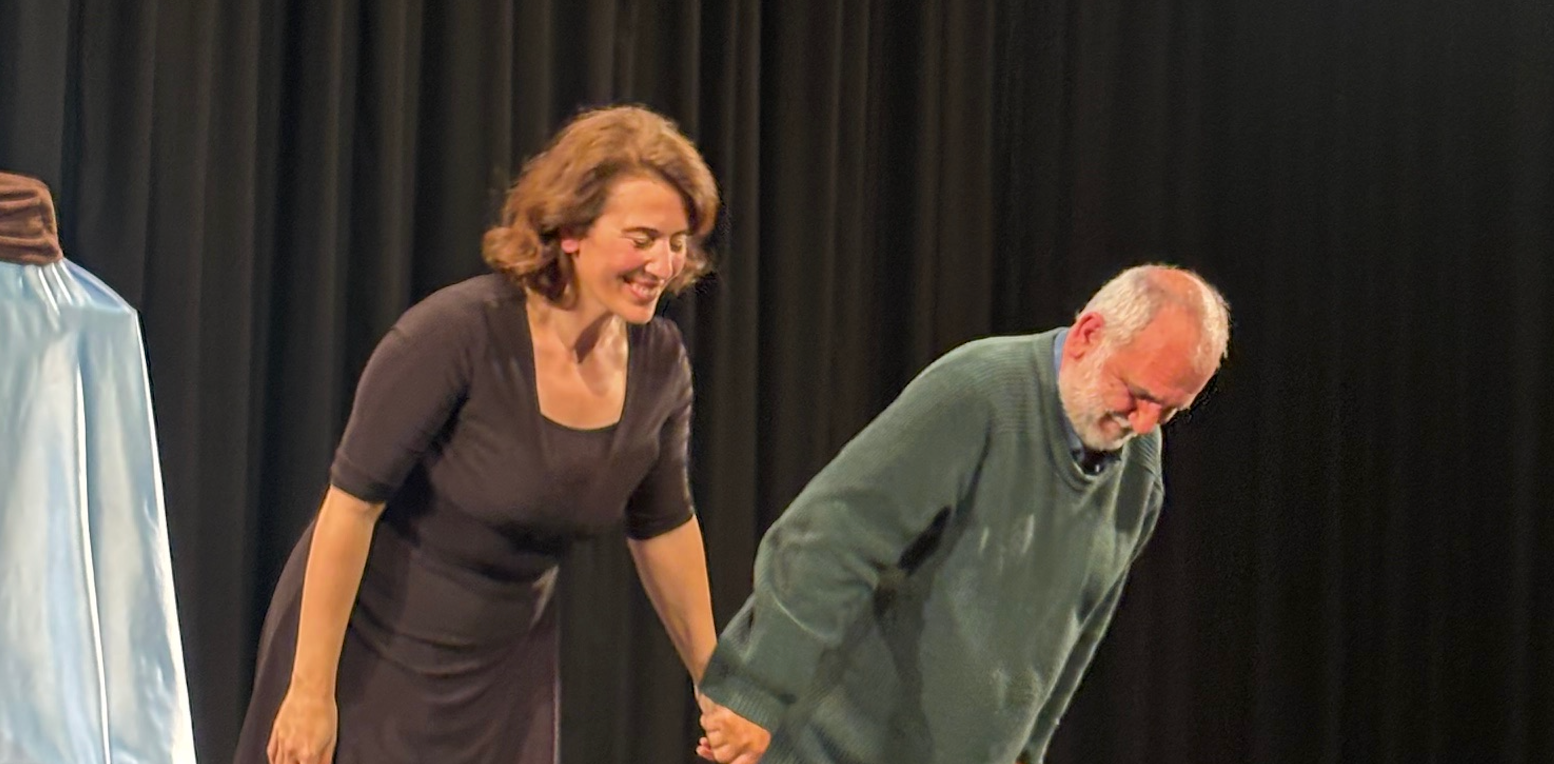
Yehia Jaber has long shaped the Lebanese stage through works rooted in communities, dialects, and daily life. His theater draws its strength from observation, rhythm, and the pulse of spoken language. Over the years, he has moved from one Lebanese environment to another, allowing each place to enter the stage through its people and their stories. With Al Qornet el Bayda, he turns towards the North of Lebanon and offers a work of remarkable density and vitality. At the center of this new creation stands Maria Douaihy, alone on stage, playing, dancing, and singing the women of a village that lives through her body and voice.

Yehia Jaber’s Theatrical Landscape
Yehia Jaber has carved a distinct path in Lebanese theater, grounded in language and human detail. His writing grows out of oral storytelling and a deep familiarity with social textures. He captures the cadence of dialect and the subtleties of regional speech, allowing characters to emerge from within their environment.
In Al Qornet el Bayda, he directs his gaze toward the northern mountains and toward a collective memory shaped by tradition, conflict, and intimacy. Political, social, and human layers meet naturally. The structure moves with energy and emotional weight. Tragedy and humor share the same space, reflecting the complexity of lived experience. Through this composition, Jaber extends his exploration of Lebanon’s inner landscapes and reinforces his place among the most attentive voices of its theater.
Maria Douaihy at the Center
Maria Douaihy stands alone on stage and gives life to a multitude of characters. She plays, she dances, she sings. With controlled transitions and emotional precision, she moves between figures and generations. A daughter appears, then a mother, then a storyteller. Each figure gains form through voice, posture, and rhythm.

Her command of the northern dialect roots the performance in its geography. Her mezzo soprano voice enriches the spoken word with musical depth. Speech moves into song, then returns to narrative. Through these shifts, she sustains a strong emotional current throughout the evening.
A Body in Motion
The performance advances through action as much as through language. Maria Douaihy dances when memory rises and rhythm calls for movement. Her gestures define the space and give texture to each scene. Everyday tasks form part of the theatrical structure. She cooks, arranges, tidies, transforms. These movements ground the story in daily life and maintain a dynamic pace.

Her singing adds another dimension. Melody introduces a layer of intimacy and shared heritage. Through song, the emotional atmosphere deepens. The stage becomes a living environment where body and voice meet.
Women, Love, and Inherited Codes
Women stand at the core of the narrative. Their lives reveal the forces that shape the village. Questions of honor, fertility, affection, and retaliation move through the scenes with intensity. A devastating tragedy exposes the weight placed upon reputation and the vulnerability imposed upon the female body. A story of longing for motherhood appears through humor and quiet sorrow. A mother interrupts a cycle of blood and alters its direction. A man’s tenderness towards his wife disturbs established expectations.

Through these intertwined destinies, the North appears in its complexity. The village emerges with nuance, shaped by both cruelty and warmth. Memory takes form through storytelling, movement, and song, creating a layered portrait of communal life.
A Stage of Memory and Belonging
The closing declaration resonates with ownership and dignity. Names return to those who speak them. Land returns to those who inhabit it. Identity rises through voice and remembrance.
Yehia Jaber extends his contribution to Lebanese theater through a work that honors language, region, and human depth. Maria Douaihy gives this creation vivid form. She plays, she dances, she sings, and through her artistry the women of the North gather before us. Together, they shape an evening in which theater becomes memory set in motion and song shared across generations.