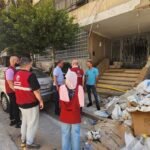
The World Health Organization said that the outbreak of the Ebola virus in the Democratic Republic of the Congo and Uganda represents a public health emergency of international concern, after recording 80 deaths suspected of being caused by the disease.
The organization said that the spread of the disease caused by the Bundibugyo strain does not meet the criteria to constitute a pandemic, but countries that share a land border with the Democratic Republic of the Congo are at high risk of further spread.
It added in a statement that it had received reports of 80 deaths suspected to be caused by the virus, eight cases confirmed by laboratory samples, and 246 suspected cases of infection as of Saturday in the Ituri region of the Democratic Republic of the Congo, distributed among at least three health regions: Bunia, Rumbara and Mongowalo.
The March 23 rebel movement said in a statement that a laboratory had confirmed one case of infection with the virus in the city of Goma in eastern Congo.
CBS News quoted unnamed sources in international relief organizations that at least six Americans in the Democratic Republic of the Congo were exposed to the Ebola virus, with three of these cases considered high-risk.
Stat News Network said that one of the Americans may have shown symptoms of the disease. Reuters could not immediately verify these reports. Stat News, citing unnamed sources, also reported that the US government is trying to transfer these individuals out of the country, perhaps to a military base in Germany.
Satish Pillai, director of the Ebola response effort at the US Centers for Disease Control and Prevention, declined during a press conference on Sunday to say whether any Americans were among those infected, but stressed that the risk to the United States remains low.
Officials from the US Centers for Disease Control and Prevention told reporters on Sunday that it had activated its emergency response center and intended to send more staff to its offices in the Democratic Republic of Congo and Uganda.
On Sunday, the US Embassy in the Democratic Republic of the Congo issued a health alert reminding US citizens that the State Department advises Americans against traveling to Ituri, and that the US government’s ability to provide emergency services to US citizens in the region is “extremely limited.”
“Do not travel to this area for any reason,” the warning read.
* WHO: Documenting the spread internationally
The Ministry of Health in the Democratic Republic of the Congo announced on Friday that 80 deaths had been recorded in the Ituri region in the east of the country as a result of a new outbreak of the virus.
The organization said that the spread of the disease, the seventeenth in the country since the Ebola virus was first discovered in 1976, may be much broader due to the high percentage of positive samples in initial tests and the increasing number of suspected cases.
The organization described this spread as “exceptional” given that there are no approved treatments or vaccines for the Bundibugyo strain, unlike the Zaire strain. All but one of the previous outbreaks in the country were caused by the Zaire variant.
She noted that the outbreak of the virus in the Democratic Republic of the Congo and Uganda poses a threat to public health in other countries, with some cases of spread documented internationally, and advised countries to activate their national disaster and emergency management mechanisms and conduct cross-border checks and on main internal roads.
The organization indicated that two cases confirmed by laboratories that did not appear to be related were reported in the Ugandan capital, Kampala, on Friday and Saturday, one of them a death, for two people coming from the Democratic Republic of the Congo.
The organization said on Sunday that a case of infection with the virus confirmed by laboratory samples earlier in Kinshasa, the capital of the Democratic Republic of the Congo, was confirmed to be free of the virus after a second examination.
The organization recommended that those infected with the Bundibugyo strain or those in contact with them not travel abroad except as part of a medical evacuation.
It was advised to isolate confirmed cases immediately and monitor contacts on a daily basis, while restricting travel within the country and preventing international travel for 21 days after exposure to the virus.
At the same time, the organization urged countries not to close their borders or restrict travel and trade out of fear, as this could lead to people and goods crossing borders informally without oversight.
The dense tropical forests of the Democratic Republic of the Congo are a natural reservoir for the Ebola virus.
Jean Cassia, Director-General of the African Centers for Disease Control and Prevention, said in a statement that he requested technical guidance and recommendations regarding the need to potentially declare the outbreak a public health emergency affecting security on the continent.
The African Centers indicated that the virus, which often causes death and causes fever, body pain, vomiting and diarrhea, is spread through direct contact with the bodily fluids of infected people, contaminated materials, or people who have died due to the disease.
The post WHO: The Ebola outbreak in Congo and Uganda is a global emergency appeared first on Voice of Beirut International.