
[“The following copyrighted article is shared
with permission, and courtesy of theartpulse.com”]
Source link
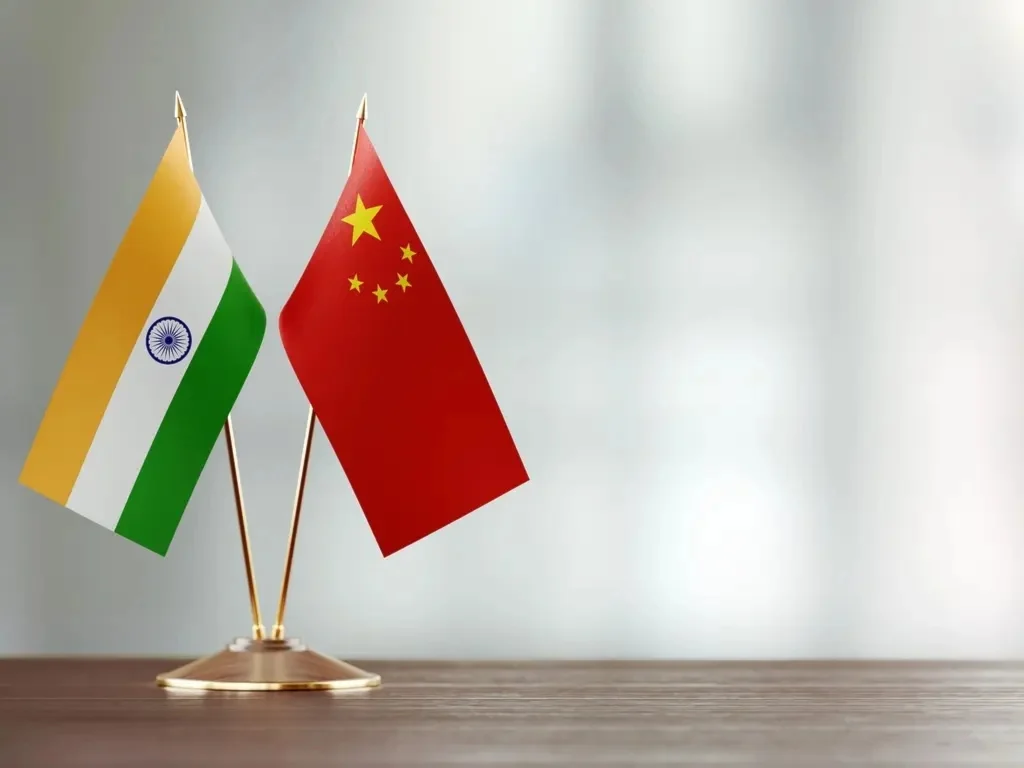
India-China relations witnessed a new step towards stability, as Beijing and New Delhi discussed the file Demarcation Disputed management of transboundary rivers are major points of contention in relations.
A statement issued by the Indian Ministry of External Affairs, today, Thursday, stated that the two sides discussed the issue of “demarcation” of the common border, at a time when India sought to hold an “urgent meeting” to reach an agreement on sharing the waters of “cross-border rivers,” without announcing specific dates for the follow-up sessions on this file.
These talks came after the conclusion of the 35th meeting of the “Working Mechanism for Consultation and Coordination on Border Affairs between India and China,” which is the bilateral diplomatic platform dedicated to managing disputes between the two countries. The Indian Ministry described the discussions as “constructive and forward-looking,” stressing that consolidating peace along the border is a mandatory path that allows “the normalization of bilateral relations.”
The nuclear-armed neighbors share a disputed, unmarked 3,488-kilometre (2,167-mile) border running along the Himalayan mountain ranges, an area that has been a source of recurring friction between the world’s two most populous nations over the past seven decades.
Bilateral relations deteriorated sharply in 2020 following a bloody military confrontation on the border that resulted in the killing of a number of soldiers on both sides. New Delhi then responded by taking protectionist measures that included discouraging Chinese investments, blocking hundreds of applications and electronic services for mobile phones (such as TikTok and WeChat), in addition to reducing entry visas granted to Chinese citizens.
Beijing’s construction of the world’s largest hydroelectric dam on the cross-border Yarlung Zangpo River in Tibet (known for its seismic activity) has also deepened tensions, as this river is a major source of water for millions of people downstream, as it passes through northeastern India before emptying into Bangladesh.
Despite the four years of stagnation, the features of a diplomatic breakthrough began to take shape last August, when Indian Prime Minister Narendra Modi visited China and met with President Xi Jinping, after a break in meetings that lasted 6 years, during which heavy customs duties were imposed between the two countries. This was followed by the two parties agreeing last January on concrete steps that included resuming direct flights, facilitating visa procedures, as well as resuming the exchange of data related to cross-border rivers.
Last August, the two sides agreed to launch the border demarcation process, by first agreeing on the prominent landmarks (such as hilltops, mountain ranges, and river courses), in preparation for a more detailed process to determine the final border path on maps by agreement of both parties.
The Indian Foreign Ministry announced that the two sides agreed to work together to make fundamental preparations for the next meeting of special representatives scheduled to be held in China, without specifying its date yet.