
[“The following copyrighted article is shared
with permission, and courtesy of theartpulse.com”]
Source link
With the escalation of the wars launched by “Israel” and their political and humanitarian repercussions, indications are increasing within Europe of a gradual shift in dealing with the occupying entity, whether at the popular, cultural, or even political and economic levels. After years of traditional European support, positions and movements began to emerge that reflect the expanding state of opposition within a number of European countries, amid growing pressure to reconsider the nature of the relationship with “Israel.”
Although it is still early to talk about “complete” European isolation, especially in light of the stubborn German position, the simultaneous cultural boycotts and sanctions on settlers for their repeated attacks on the Palestinians, in addition to the review of some partnership and cooperation agreements, reflects the escalation of the European debate regarding the limits of continued support for “Israel” in light of the ongoing aggression against Gaza.
“Eurovision” is an arena that reflects the European division towards “Israel”
This year, the “Eurovision” competition turned into one of the most prominent arenas that reflected the escalation of the European debate regarding “Israel”, after five European countries, namely Spain, the Netherlands, Ireland, Iceland and Slovenia, announced a boycott of the 2026 edition, in protest against “Israel’s” participation in it, in light of the continuing war.
Reuters reported that the boycott reduced the number of participants in the competition to 35 countries, the lowest number since 2003, at a time when the political controversy related to the war dominated the atmosphere of the competition hosted by Vienna.
According to European reports, some participating broadcasters considered that Israel’s continued participation in the competition was causing internal divisions and increasing popular pressure, especially with the continuing war on Gaza and its humanitarian repercussions.
Reports indicated mounting calls within European media and cultural circles to review the position of the European Broadcasting Union, in light of accusations of double standards compared to previous decisions taken against other countries on political and military grounds.
Several European cities also witnessed protests and demonstrations coinciding with the competition’s activities, while a number of participants and organizers faced repeated questions regarding Israel’s participation, which pushed the political controversy to the forefront of an event that was supposed to be primarily artistic and entertainment.
European sanctions on settlers accused of assaulting Palestinians
The European controversy towards “Israel” was not limited to the cultural and artistic arenas, but rather began to gradually withdraw to the political level, with the escalation of European criticism of the war and the taking of official steps that targeted settlers involved in acts of violence against the Palestinians.
In recent months, the European Union, along with a number of European countries, imposed sanctions on settlers and entities linked to the ongoing attacks in the West Bank, which included asset freezes and travel restrictions.
European Union institutions have also witnessed increasing discussions regarding the nature of the relationship with “Israel,” amid calls from some European governments and parties to review cooperation and partnership agreements, and link them to developments related to the war on Gaza and the humanitarian file.
In parallel, proposals have emerged within the European Union to impose trade restrictions or fees on settlement products, an indication that part of European pressure has moved from the symbolic political level to discussions that directly affect economic and trade relations.
Despite the continued division within the European Union between countries pushing for increased pressure and others that continue to support “Israel” politically, the expansion of this debate within European institutions reflects a gradual shift compared to traditional European positions over the past years.
Economic and trade pressures are escalating
As the political debate expanded within Europe, the discussion also began to affect the nature of economic and trade relations with “Israel,” an indication that some of the pressures had moved from the symbolic and political level to files related to direct interests between the two sides.
During recent months, calls have increased within European institutions and popular and civil circles to review the Association Agreement between the European Union and “Israel,” which is the basic framework for commercial and political relations between the two parties. In this context, a popular European initiative calling for the suspension of the agreement exceeded the threshold of one million signatures, which forces the European Commission and the European Parliament to formally consider the request.
The European Union has also witnessed increasing discussions about imposing restrictions on products coming from Israeli settlements, amid calls from countries such as Spain, Ireland, Slovenia, France, and Sweden to take more stringent steps towards trade relations linked to settlements.
Although the European Union foreign ministers have failed, so far, to reach a consensus on suspending the association agreement with “Israel”, due to the continuing divisions between member states, the mere fact that the issue was repeatedly brought up on the European discussion table reflects a shift compared to previous years, when such proposals were considered “marginal” within the Union’s institutions.
In parallel, European and international companies are facing increasing pressure from boycott campaigns and civil society organizations due to activities or investments linked to “Israel” or the settlements, at a time when controversy is increasing within Europe about the cost of continuing economic relations in isolation from the political and humanitarian developments related to the war on Gaza.
Legal pressure and prosecutions
The escalating pressure on “Israel” was not limited to the political, cultural and economic aspects, but also extended to the legal track, with increasing movements related to the prosecution of Israeli officials and soldiers against the backdrop of the war on Gaza.
In this context, the arrest warrants issued by the International Criminal Court against Prime Minister Benjamin Netanyahu and former Defense Minister Yoav Galant remained at the center of European and international controversy, against the backdrop of accusations related to committing war crimes and crimes against humanity in Gaza. Israel also asked the International Criminal Court to withdraw the arrest warrant issued against Netanyahu, in light of the continuing international controversy related to the case.
These memorandums sparked divisions within Europe regarding how to deal with Netanyahu if he visits member states of the International Criminal Court. In this context, Al-Mayadeen had quoted the Swiss authorities as saying that they were “obligated in principle” to arrest Netanyahu if he participated in the Davos Forum, given that Switzerland is a member of the International Criminal Court.
Hungary was particularly prominent in this controversy, after Hungarian Prime Minister Viktor Orban received Netanyahu in Budapest despite the arrest warrant issued against him, in a move that was considered a direct challenge to the International Criminal Court. The Hungarian government also announced, in conjunction with the visit, the start of withdrawal procedures from the International Criminal Court, but the situation has changed now with the fall of Orban in the last elections, as observers are awaiting the position of the new government, especially in terms of the trade relationship with the occupation, or dealing with Netanyahu’s case in the International Criminal Court.
In parallel, European countries witnessed legal movements and lawsuits related to the prosecution of Israeli soldiers accused of involvement in violations during the war on Gaza, amid increasing warnings within “Israel” about the repercussions of traveling to some European countries that adopt the principle of universal jurisdiction in war crimes cases. Israeli reports also spoke of recommendations directed to soldiers and officers to reduce the publication of their personal information and photos during their military service, for fear of using them in foreign legal cases.
The arrival of pressure on the judicial and legal paths reflects the expansion of the European and international debate related to the war on Gaza, after the issue began to be raised in a political or diplomatic framework, and also within discussions related to international legal accountability.
The legal actions related to the war on Gaza were not limited to the prosecution of Israeli political officials, but also extended to soldiers and officers in the occupation “army,” amid the escalation of lawsuits and judicial actions in a number of European countries based on accusations of committing violations and war crimes during military operations in Gaza.
During recent months, warnings directed to soldiers against traveling abroad have increased within Israel, especially to countries that rely on the principle of universal jurisdiction in war crimes cases, in light of fears of filing lawsuits or arrest requests against them.
Israeli and international reports also spoke of recommendations directed to soldiers and officers to reduce the publication of their photos and personal information on social media sites, for fear of using them in legal files or lawsuits related to the war on Gaza.
The transfer of pressure to the level of prosecuting individuals, and not just political officials, reflects the expansion of the international legal debate related to the war on Gaza, and its reaching unprecedented levels for “Israel” within a number of European countries.
Is “Israel” entering a phase of gradual European isolation?
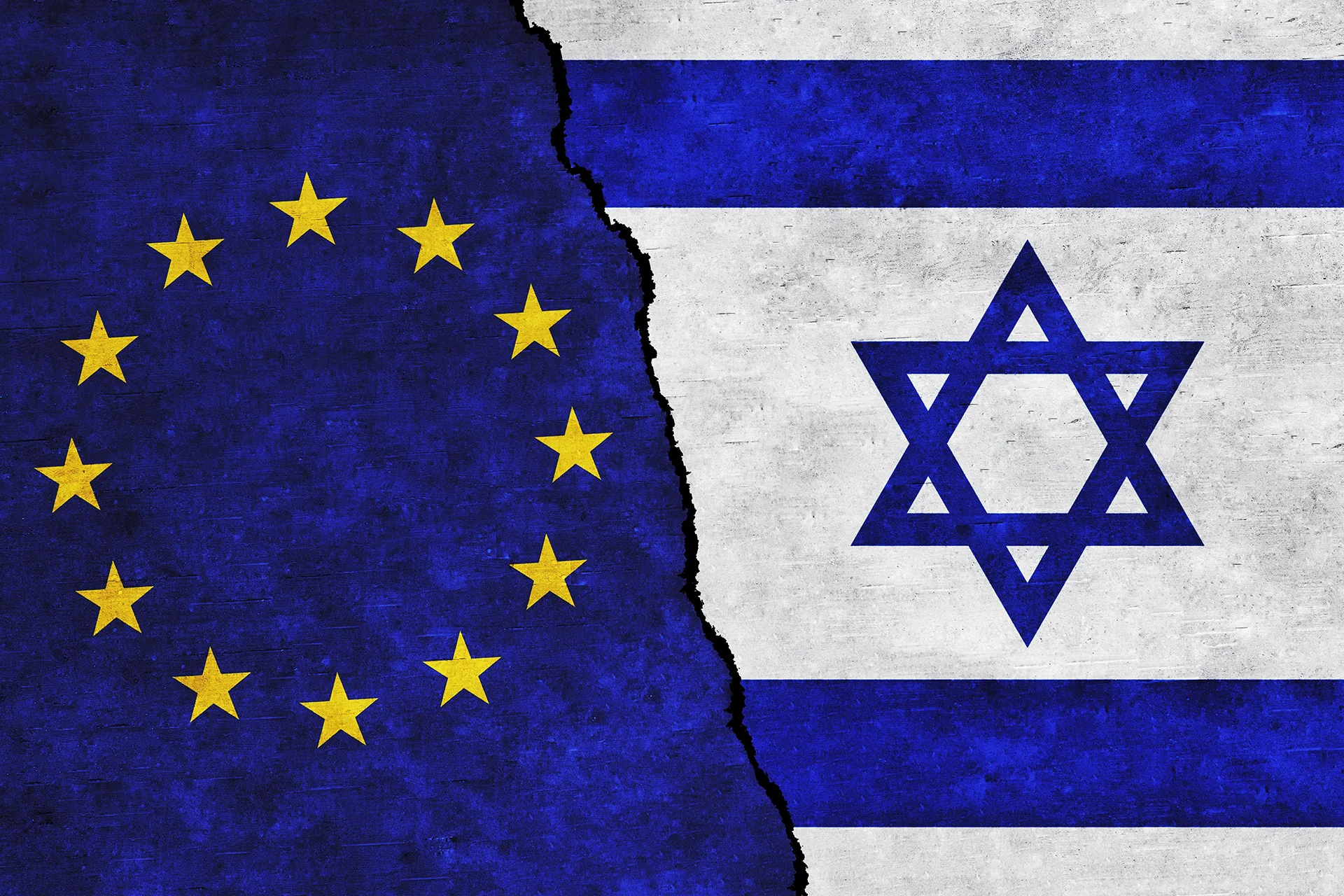
Although it is still early to talk about complete European isolation of “Israel,” the simultaneous cultural, political, economic, and legal pressures reflect a “gradual” shift in the nature of the European debate toward it, compared to past years, which were characterized by almost constant European support at the official and cultural levels.
What is happening today is not limited to reactions related to Israel’s current wars only, but also reflects the accumulation of popular and human rights pressures within Europe, which has pushed European governments and institutions to adopt more stringent positions or at least open discussions that were previously considered sensitive, such as reviewing partnership agreements or imposing sanctions related to settlements.
On the other hand, several European countries still refuse to take broad escalatory steps against “Israel,” whether for political or strategic reasons, which keeps the European position divided between a direction that pushes for increased pressure, and another that adheres to maintaining traditional relations with “Israel.”
However, the expansion of boycott and protest campaigns, and the discussion’s reach into cultural, commercial, political, and other issues, reflects a growing image crisis facing “Israel” within Europe, in light of the continuing wars it is waging, and their humanitarian and political repercussions in the region.
Israel may not be isolated in Europe yet, but accumulated indicators suggest that the wars have begun to cause a growing rift in the relationship that has always been considered “firm and stable” between the two sides, amid questions about the shape of this relationship and its limits during the next stage.