
[“The following copyrighted article is shared
with permission, and courtesy of theartpulse.com”]
Source link
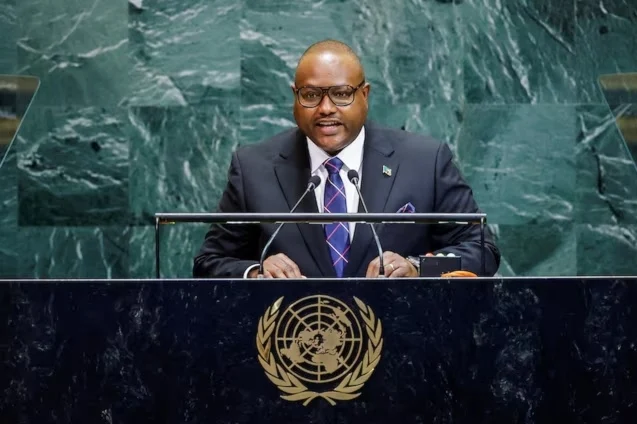
The government in Zambia announced its refusal to link a proposed health aid agreement with the United States to obtaining its resources of strategic minerals, stressing the necessity of completely separating the two paths.
Foreign Minister Mulambo Haimbi explained that Washington had offered health support amounting to about two billion dollars over five years, but some of the terms of the agreement, especially related to data sharing, may violate citizens’ privacy.
He added that one of the most prominent points of disagreement is “linking” the health agreement to a separate agreement related to vital minerals, so that approval of one becomes conditional on the other, which Lusaka rejects, stressing that each agreement must be evaluated independently according to the state’s interest.
Zambia also expressed reservations about provisions in the minerals agreement, especially those that grant preferential treatment to American companies in the mining sector, which is one of the pillars of the national economy. This position comes in the context of escalating tension in the negotiations between the two sides, after exchanging criticism over the failure to reach an agreement, amid a broader controversy in Africa over the conditions for new US aid, especially with regard to sovereign data and natural resources.
These differences fall within a recent American approach to reformulating foreign aid programs, linking development support with strategic interests, which raises concerns in a number of African countries about economic sovereignty and control of resources.